Real-Time Translation and Voice Cloning: The 2026 Guide
Learn how real-time translation, bilingual subtitles, and AI voice cloning work together for meetings, livestreams, sales calls, training, and global teams in 2026.
Quick answer
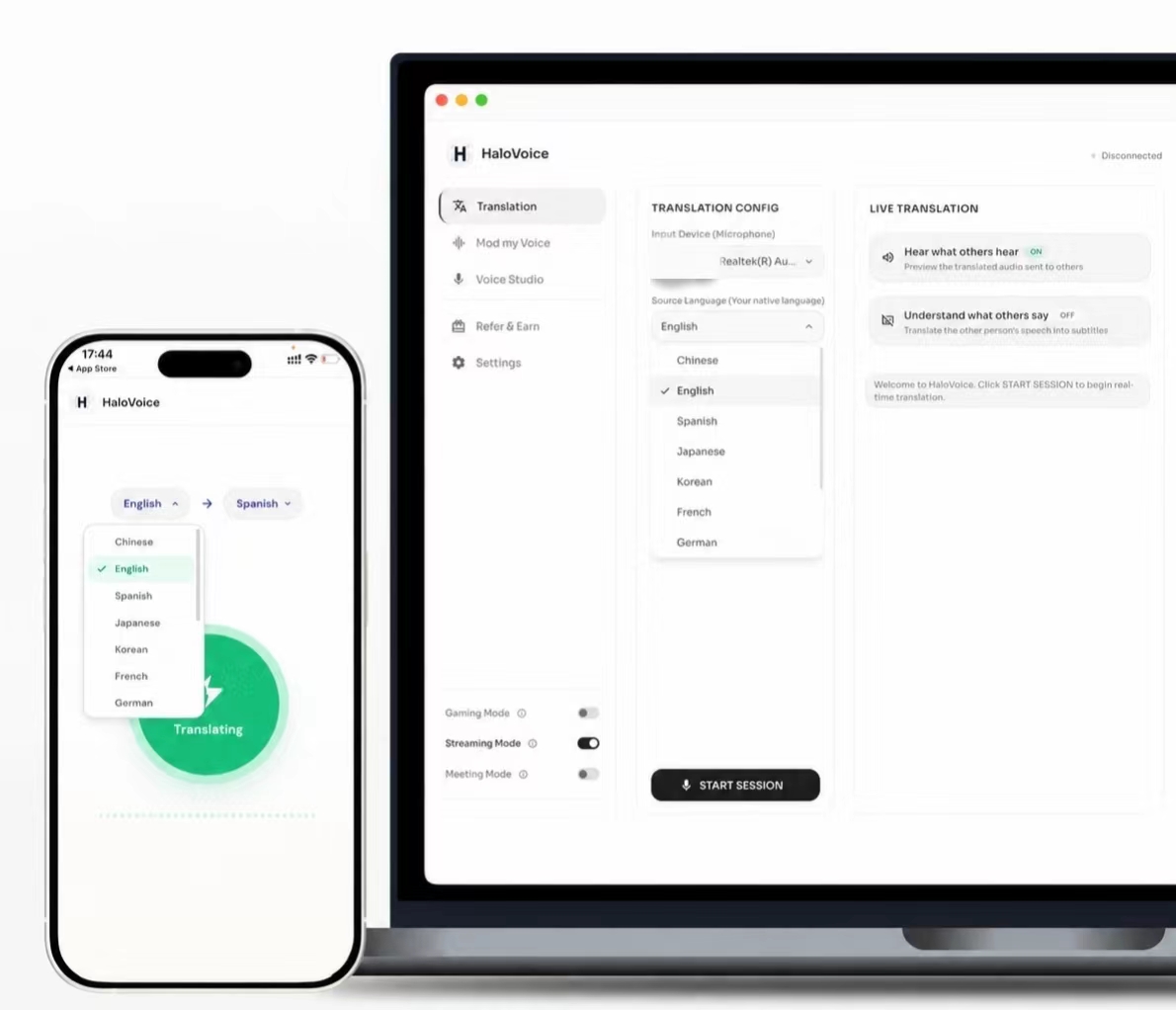
Real-time translation converts live speech into another language while the conversation is still happening. Voice cloning adds a natural voice layer by preserving the speaker’s tone, rhythm, and identity instead of replacing them with a generic synthetic voice.
Context
Why real-time translation is becoming a business requirement
Global collaboration is no longer limited to large enterprises. A product team may be in China, the sales team may be in the United States, operations may be in Japan, and customers may join from Europe or Southeast Asia. In that environment, language is not a small inconvenience. It can slow decisions, reduce trust, and create misunderstandings at exactly the moment when clarity matters most.
Traditional solutions still have value, but they do not scale well for every meeting, demo, stream, or training session. Human interpreters are expensive. Bilingual employees are not always available. Text translators are helpful for documents, but they break down when speech is continuous and people need to respond immediately.
That is why live AI translation has moved from a “nice to have” tool into a core communication layer for international teams.
- Cross-border meetings need low-latency translation, not post-meeting summaries only.
- Sales and support teams need to explain products without switching tools constantly.
- Livestreamers and educators need multilingual reach without producing separate content for every language.
- Global users expect translated captions and audio to feel natural, fast, and trustworthy.
What is real-time translation?
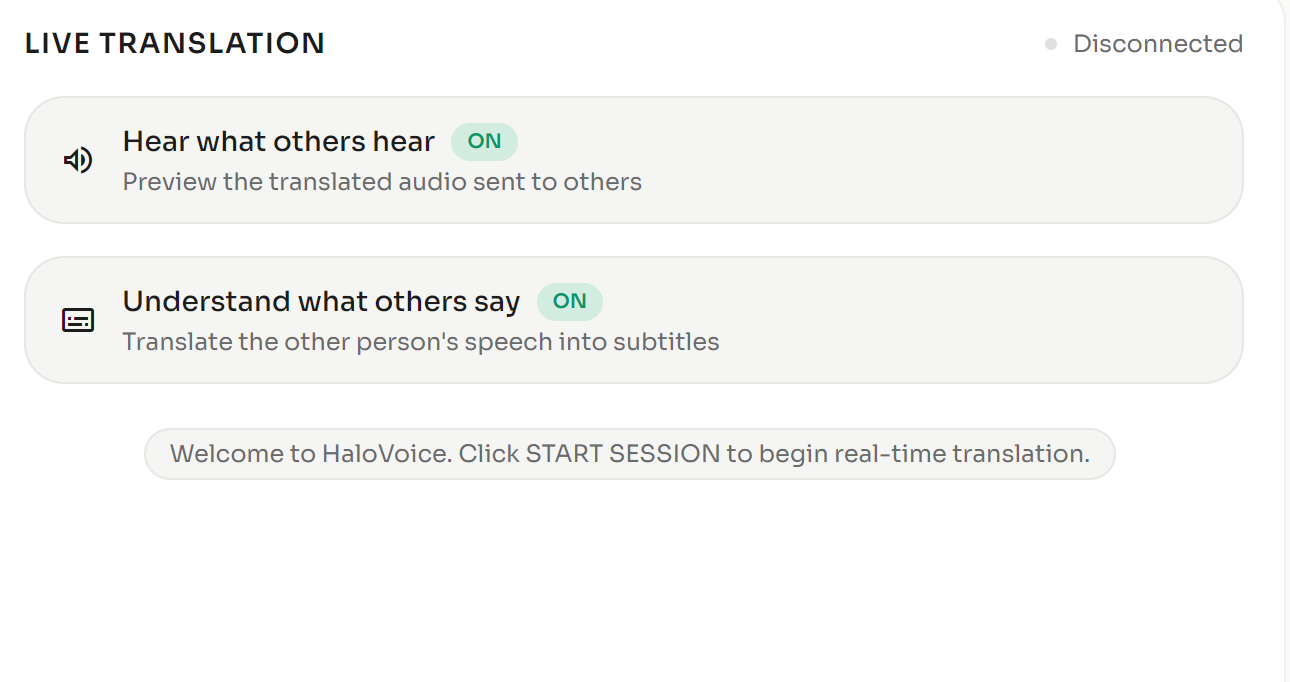
Real-time translation is the process of listening to spoken language, recognizing the words, translating the meaning, and displaying or speaking the result within a few seconds. Instead of waiting for a transcript after the conversation, users can follow the discussion as it happens.
In practice, a speaker can talk in Chinese while another participant sees English subtitles, hears English voice output, or reviews both the original and translated text side by side. The goal is not simply to translate isolated words. The goal is to keep people inside the same conversation.
- Live speech recognition turns audio into text.
- Machine translation converts the meaning into the target language.
- Bilingual subtitles make the original and translated content easy to compare.
- Translated voice output helps users listen instead of constantly reading the screen.
What is voice cloning?
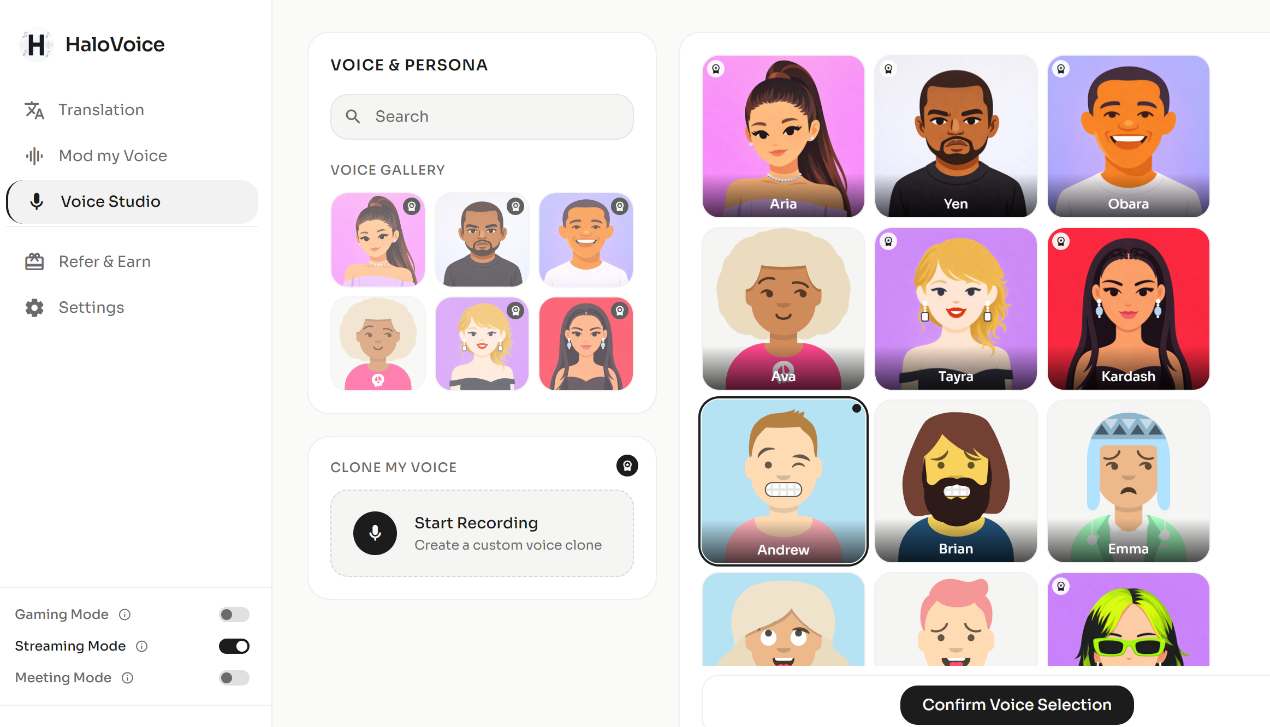
Voice cloning uses AI models to reproduce the recognizable characteristics of a speaker’s voice. A basic translation tool may read the translated sentence with the same generic machine voice for every person. Voice cloning makes the result feel more personal by preserving qualities such as tone, speaking style, pace, and emotional expression.
This matters because communication is not only about words. A founder’s pitch, a teacher’s explanation, a creator’s stream, or a support agent’s reassurance can lose impact if the translated version sounds flat and robotic. Natural voice output helps the translated message retain more of the speaker’s intent.
- Preserves speaker identity across languages.
- Makes translated audio feel warmer and more human.
- Improves brand consistency for founders, creators, and customer-facing teams.
- Reduces the fatigue of listening to generic synthetic voices for long sessions.
How real-time translation and voice cloning work together
A modern real-time voice translation system usually combines five stages. Each stage must be fast enough for live communication and accurate enough for professional use.
| Stage | What happens | Why it matters |
|---|---|---|
| Speech recognition | The system listens to the speaker and converts audio into text. | Accurate recognition is the foundation for every later step. |
| Context understanding | The system uses surrounding sentences, names, and terminology to infer meaning. | This helps avoid literal translations that miss the business context. |
| Machine translation | The recognized text is translated into the target language. | Speed and semantic accuracy both matter in live conversations. |
| Voice generation | The translated sentence is synthesized as audio, optionally using a cloned voice. | Natural delivery makes the translated message easier to trust and follow. |
| Synchronized output | Users receive subtitles, translated audio, or both while the meeting continues. | The conversation keeps moving without manual copy-paste work. |
Where live translation creates the most value
Real-time translation is useful anywhere people need to speak across languages without stopping the flow of communication. The highest-value use cases are usually situations where delay, misunderstanding, or loss of tone directly affects business outcomes.
- International business meetings: participants can use their preferred language while following translated subtitles or audio.
- Global sales demos: sellers can present product value, answer questions, and negotiate without relying on a bilingual teammate for every call.
- Online education and training: teachers can speak naturally while students read or hear translated explanations in real time.
- Customer support and supplier calls: teams can clarify issues, delivery dates, technical details, and next steps more quickly.
- Livestreaming and creator content: translated captions and voice help creators reach multilingual audiences without duplicating the entire stream.
- Gaming and Discord communities: players and community members can collaborate across languages while staying in the same voice channel.
What to look for in a real-time translation platform
Not every translation tool is built for live speech. For meetings, streams, and professional collaboration, the most important question is whether the tool can handle real conversations instead of isolated phrases.
- Low latency: a practical live translator should keep delay short enough that people can still respond naturally.
- High accuracy: the system should handle names, numbers, product terms, and domain vocabulary.
- Two-way translation: both sides should be able to speak their own language without repeatedly switching modes.
- Bilingual subtitles: showing original and translated text together helps users verify meaning and catch recognition errors.
- Natural voice output: translated audio should be easy to listen to, especially in longer sessions.
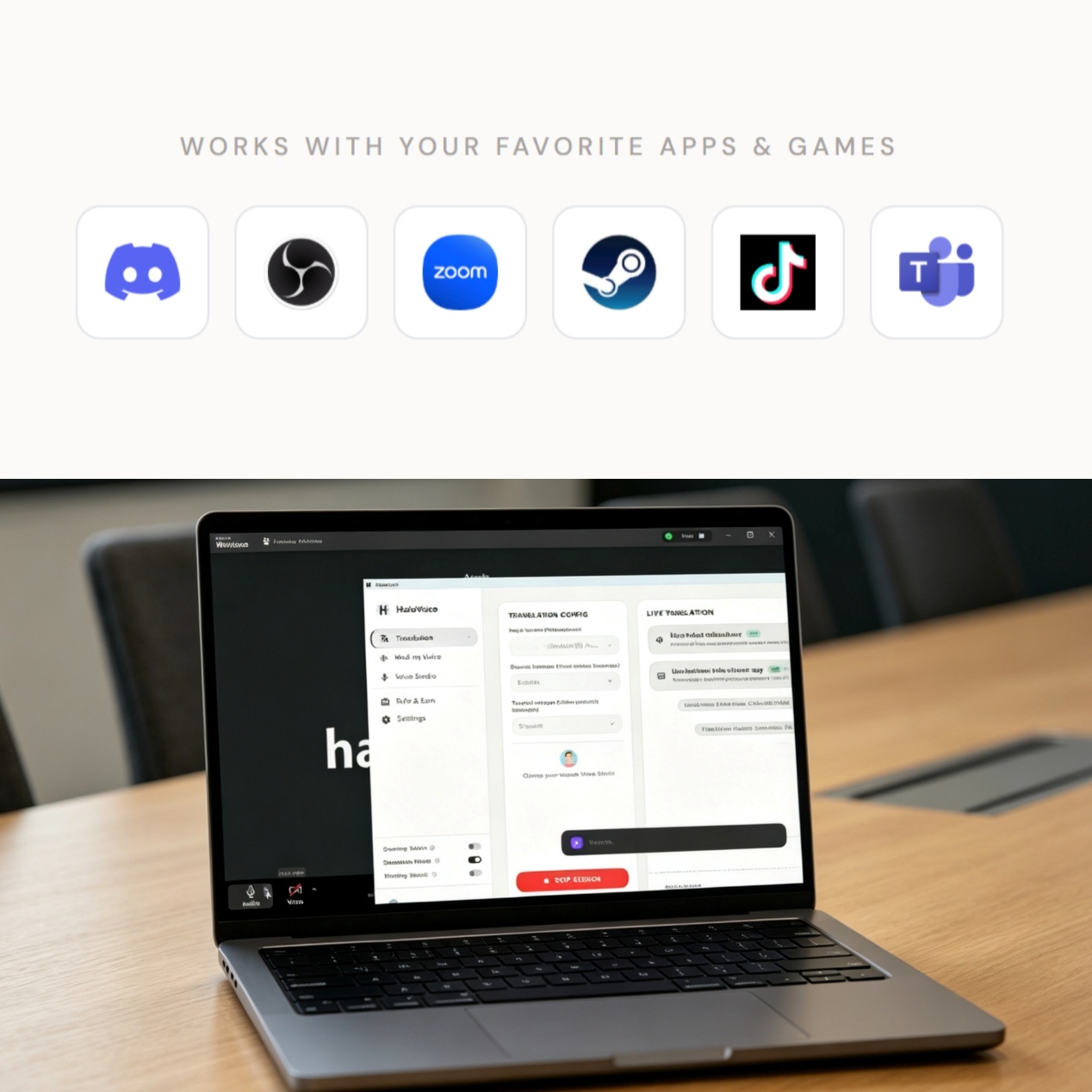
- Workflow compatibility: the tool should work with common meeting, streaming, and community platforms such as Zoom, Microsoft Teams, Discord, OBS, and TikTok.
- Privacy and control: business users need to understand how audio, transcripts, and voice models are handled.
AI translation vs. human interpretation
AI translation and human interpretation are not identical. Human interpreters remain the best option for high-stakes legal, medical, diplomatic, or highly nuanced negotiations. But AI translation is increasingly practical for daily operations where speed, cost, and scale matter.
| Factor | AI real-time translation | Human interpretation |
|---|---|---|
| Cost | Low marginal cost for frequent usage | High per-session or per-day cost |
| Speed | Available instantly for recurring meetings | Requires scheduling and coordination |
| Scale | Can support many sessions and language pairs | Limited by interpreter availability |
| Context | Strong with good models and terminology support | Best for nuanced judgment and sensitive contexts |
| Voice continuity | Can preserve speaker style with voice cloning | Depends on interpreter delivery |
| Best fit | Meetings, demos, streams, classes, support, daily collaboration | Legal, medical, diplomacy, complex negotiations |
How HaloVoice approaches real-time translation and voice cloning
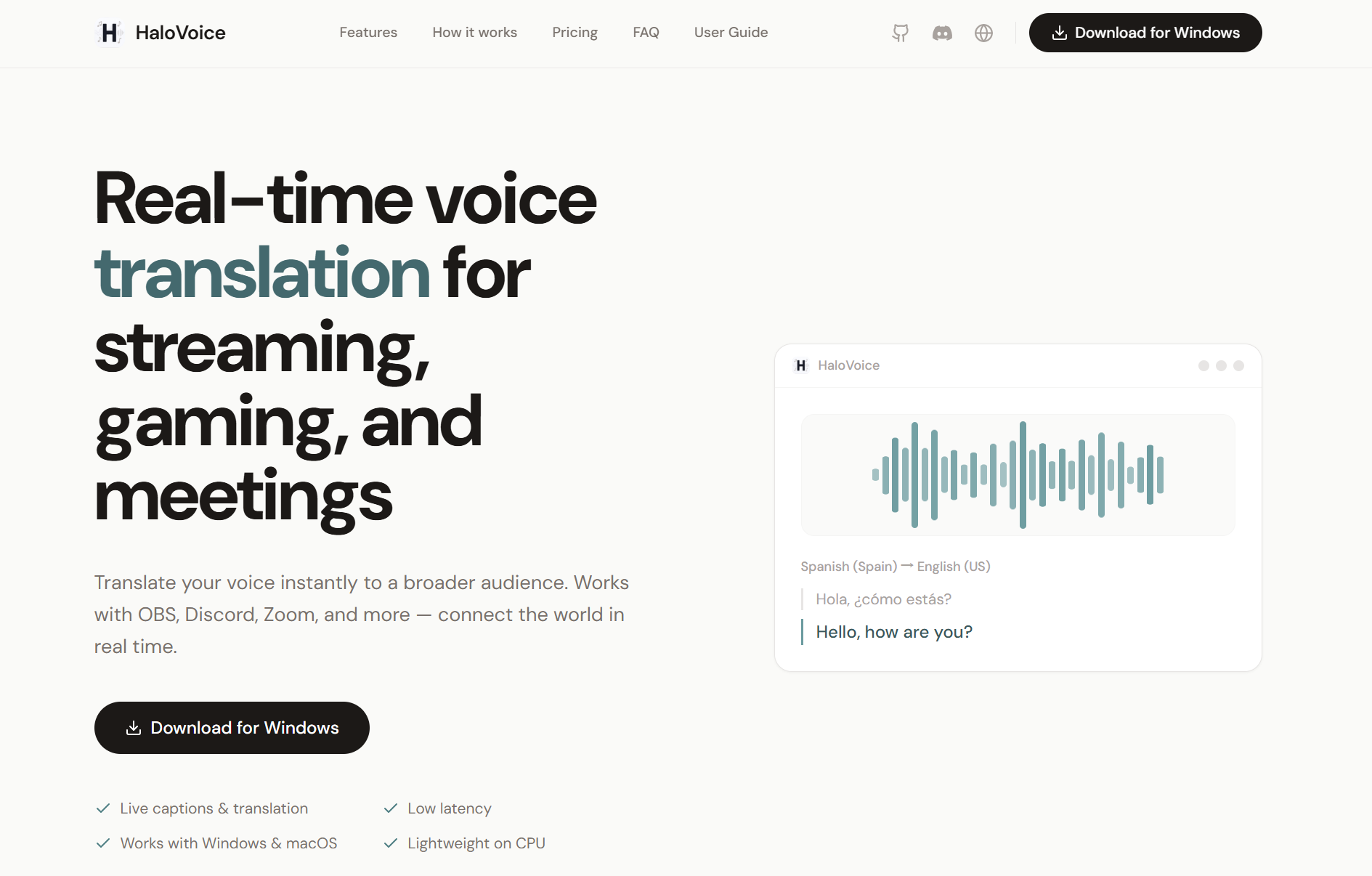
HaloVoice is built for people who need live voice translation in the tools they already use. Instead of treating translation as a separate document workflow, HaloVoice focuses on real-time speech, bilingual subtitles, AI voice output, and voice cloning for meetings, streaming, gaming, education, and global collaboration.
The product is designed for practical workflows: joining a Discord voice channel, presenting in Zoom or Teams, streaming through OBS, speaking to a TikTok audience, or helping an international customer understand a product demo.
- Real-time voice translation for live conversations.
- AI voice cloning to keep translated audio closer to the original speaker.
- Bilingual subtitles for easier verification and comprehension.
- Support for common collaboration and creator workflows, including Zoom, Teams, Discord, OBS, Steam, and TikTok.
- A simple setup path for individuals, creators, and global teams.
The future of multilingual communication
Over the next few years, real-time translation will become faster, more context-aware, and more natural. The biggest improvements will not only be in word accuracy. They will be in timing, emotional expression, terminology control, and the ability to preserve the human qualities that make speech persuasive.
As voice cloning improves, translated audio will feel less like a machine reading a transcript and more like the original speaker communicating in another language. That shift will make global meetings, online education, customer support, and creator content feel more immediate and more human.
HaloVoice FAQ
Is AI real-time translation accurate enough for business meetings?
For many everyday business meetings, modern AI translation is accurate enough to follow the discussion, capture decisions, and reduce language friction. High-stakes legal, medical, or contractual conversations should still use professional human support and written confirmation.
How much audio is needed for voice cloning?
Requirements vary by product and quality target. Some modern systems can create a usable voice profile from a short sample, while higher-quality or enterprise use cases may benefit from longer, cleaner recordings.
Can real-time translation work with Zoom, Teams, Discord, or OBS?
Yes. A practical real-time translation workflow should integrate with meeting, community, and streaming tools so users do not need to rebuild their setup around a separate translation app.
Why use voice cloning instead of normal text subtitles?
Subtitles are useful, but they require people to read constantly. Voice cloning adds a more natural listening experience and helps preserve the speaker’s identity, tone, and emotional delivery across languages.
Is real-time translation useful for creators and livestreamers?
Yes. Multilingual subtitles and translated voice output can help creators reach audiences who would otherwise leave because they cannot follow the spoken language.
Keep reading
Related HaloVoice guides
Guide · 8 min read
Simultaneous Voice Translator: App, Device, or Desktop Software?
A simultaneous voice translator can be a phone app, a pocket device, or desktop software. Each one solves a different conversation. Here is how to pick.
Guide · 9 min read
Discord Translator Guide: Bots for Text, Live Translation for Voice Chat
Translator bots cover Discord text channels, but nothing on the server side can translate a voice channel. Here is what works for each, and how to set up live voice translation.